Monday, December 16, 2013

Boomerang

Is Westfield House worth coming back to? To that question, the answer is a sure and certain “yes.” But will I ever come back? That is much more uncertain, and it’s a question I don’t have the answer to. I don’t especially want to live in England again. I would much prefer to live in the United States for the rest of my life. But two things prevent me from answering “no” to the question as to whether or not I’ll ever be back at Westfield House.
The first reason is obvious: I might change my mind about never again wanting to leave the States. And the second reason was brought to my attention by Dr. Mumme. He said when he was at the seminary, his advisor, the great Norman Nagel, once told him “We do not do well to tell God how he may or may not use us to do his work.”
For this reason, I feel I should be open to future opportunities that I don’t anticipate right now. After all, I had never even heard of Westfield House just one year ago. It’s amazing what can change in just a year’s time. Now think about how much can change in a lifetime.
So will I ever make it back to Westfield House? Probably not, but you never know. I would certainly welcome another chance to see all the friends I made this semester again.
I’m writing this on an airplane flying over the Atlantic. It’s incredible how airplanes always leave the ground with confidence. I hope to pursue my future endeavors with such confidence and land with such safety. I feel like I’ve done so with this one.
I’ve paved the way for future Seward students to come to Westfield House and learn and grow as much as I did. I hope to find peers who want to take the same plunge I did. Because trust me, it’s worth it. Yes, there was a lot of hassle and stress involved, as well as a fair amount of frustration.
But it’s such an adventure, and adventures stick with you for a lifetime, whereas stress and frustration do not.
There is a crucifix on the wall in Westfield House’s main classroom. I found myself gazing at it from time to time while filling up my water bottle or sitting in class this past semester. It reminded me why I was there. And now I’m homeward bound, perhaps never to see that great seminary again. But I’ll never regret the semester I spent there. It will be a treasure that I keep with me throughout my life.
And as far as my homecoming goes, I couldn’t be more thrilled. I have the blessing of being able to spend the remainder of Advent and the entire Christmas season with my family, friends, and girlfriend in good ole Madison, Mississippi. Aside from seeing my loved ones again and attending my home church, the thing I’m looking forward to most is turning the key in my truck door, sitting on the soft, cloth driver’s seat, putting the key in the ignition, and hearing her roar. It’s been four months since I’ve driven, after all! I just hope I look the right way before crossing intersections since I’ve been in England for so long.
York, Edinburgh, and Ireland were my favorite places I visited these past months, but they don’t compare with the people I met and the truths I learned. It was the experience of a lifetime, and if studying abroad is for you, I suggest giving it a shot.
The UK has treated me well, and I look forward to setting foot on American soil in a couple of hours, four months older and… well, as far as wisdom goes… I guess we’ll have to see about that.
Isaiah 12:2 is indeed the unconditional truth: the Lord God is my strength and my song, and he has become my salvation.

Thursday, December 12, 2013

Always Leave the Ground

The music that I buy and listen to regularly during a period of time is what I like to call my soundtrack for the season. My soundtrack for this fall has consisted of some new material by some old favorites as well as a couple of new bands I got into. If any album defined my semester here it would probably be Copeland's 2006 album Eat, Sleep, Repeat. Copeland only made five albums before breaking up in 2010, and this was the final one of theirs that I purchased. I liked it so much that I listened to it and pretty much nothing else for nearly a month after I bought it.
My favorite song I got while over here would probably be Relient K's cover of Third Eye Blind's "Motorcycle Drive By." It's a song that tells a story, which happens to be the kind of songs I'm usually drawn to the most. And part of that story takes place here in England. It's a fun listen and I enjoyed listening to it 35 times this semester (according to my track plays on iTunes).
One day in late October, I decided to play that song before taking a nap. My windows were wide open and the sun was in my eyes (which happens to be a line in the song). I fell asleep with "Motorcycle Drive By" in my head, and when I woke up two hours later to the sunset peacefully crashing through the windows, it was still in my head. So does that mean it was the soundtrack to my dreams that day?
I bought my first Paramore album in September (Riot!). It'll probably be my last, but it was still a solid CD. Coldplay wrote a song for the Catching Fire soundtrack called "Atlas" that I really enjoyed. I also bought As Cities Burn's third album and a few songs from The Killers and Needtobreathe.
My favorite band released their Fading West EP in preparation for their full-length documentary that came out two days ago! Both the documentary and the EP were wonderful, and I can't wait for their full album to come out next month. They were on tour this fall for a couple months, but sadly it was only a US tour. I was in Europe for its entireity, while a few of my friends got to see them in concert. It's a bummer that I missed out on it, but there will be other concerts. There will never be another semester abroad (so it seems).
And then the final album I bought in England this semester was by a band called This Day & Age. I had never heard of them before this year, but I thought their first album was fantastic!
I think it's cool how we associate certain songs with specific times in our lives. For example, every time I hear Switchfoot's "This is Home," I think of my sixteenth birthday. I had just gotten my driver's license and was driving by myself for the first time, and that song by my favorite band came on the radio. "Oh yeah," I remember thinking, "Behind the wheel, this is home." When I told Tutor George that story, he said God has a sense of humor.
I wonder, years down the road, when I hear songs like "When You Thought You'd Never Stand Out," "Long Walk Home," or "Motorcycle Drive By," if I'll think of this semester abroad and all the gifts it gave to me. Only time will tell. I just hope that in the future, if I get fantastic opportunities like this, that I'll always leave the ground.
My next blog post will be my last one for this adventure. In it, I'll be addressing the question, "Is this place worth coming back to?" Thank you all for reading, and I hope every one of you has a blessed Advent and Christmas.

Monday, December 9, 2013

Some Races Can't Be Won

In the 1950's, the 4-minute mile was the pinnacle of athletic achievements that all sports fans were eager to see broken for the first time. And until 1954, no one had run a mile in less than 4 minutes before. But on May 6, 1954, Roger Bannister (now Sir Roger Bannister) ran a 3:59.4 mile at the Oxford University track, beating his Australian opponent John Landy.
I had plans on Saturday to go back to Oxford and run a mile on this legendary track, but it so happened that I got an upper respiratory infection the day before and was unable to use my already-purchased bus ticket. So instead of running a much slower mile on Roger Bannister Track, I spent the day in my sickbed here in Cambridge.
At first, I was quite disappointed that I couldn't make my final trip and run where one of my favorite athletes made history. But the more I thought about it, the more I realized that some races just can't be won. I can't experience everything in this life. We can only do so much and only have a certain amount of time.
Heck, if I had it in mind to experience absolutely everything I possibly could, I'd be spending a decade in college, attempting to take every course Concordia offers. I would have spent my four months here frantically travelling around Europe, trying to set my foot in every country so I can say I experienced it. But some things I simply won't get to do. And that's okay. It's the way life is, and it's something we have to accept.
I have experienced so much here in just four months. I never thought I'd make it to Europe, and I managed to travel all around the British Isles and talk to amazing people I otherwise never would have met.
One event I witnessed that I neglected to blog about was Guy Fawkes Day on November 5. It's a huge celebration here in England, made famous to Americans by the movie V for Vendetta. On November 5, 1605, a terrorist named Guy Fawkes attempted to blow up Parliament in what was to become known as the Gunpowder Plot. He didn't succeed, and so every 5th of November, England remembers that day by having fireworks celebrations and bonfires in cities around the country. The fiery picture above was from that night.
Also, my friends Micah and Dorothy had their baby on November 9 (Martin Chemnitz's birthday!). They named him Jonathan Augustine after the man from the Bible and the 5th-century theologian. I get to hold him sometimes, and we're great friends.
Some things I experienced over here I never expected to do. And other things I wanted to do (run on Roger Bannister's track) and places I wanted to see (Paris) simply didn't work out.
And that's the way life is. Some races can't be won, and others must be, though we may not know it at the time.
I'm very happy with the amount that I've experienced on this fine continent this semester. Yes, many people will have that one thing that they will say I should have done. And yes, I may never get back to Europe. But I am baptized into Christ. And with that promised salvation in my possession, what regrets are truly worth having?
I'm on the mend with my illness. My very kind doctor who I went to see today said my immune system is worn out. She said that after studying abroad for four months in a foreign country, working very hard all the while, I just need some rest. I've done a lot of homework and done loads of travelling. And now there's only one trip left to make: my trip back home.

Sunday, December 8, 2013

Chemnitz Hero

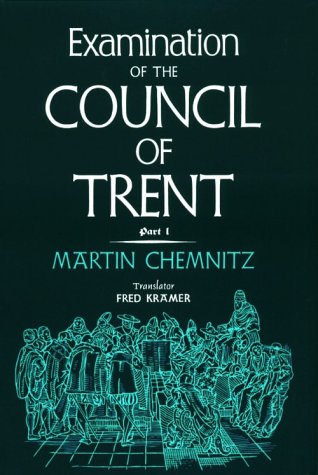
With six days to spare, I have finished my final paper! This one is for Continental Reformation with Dr. Rosin. I chose to do my 10-page research paper on Martin Chemnitz and his Examination of the Council of Trent.
Martin Chemnitz, known as "The Second Martin" was the leader of the second-generation Lutherans in Germany after Luther's death. Roman Catholic leaders at the time are rumored to have uttered the phrase, "If the second Martin had not come, the first Martin would not have stood." And that very well may be true. Chemnitz upheld Reformation teachings at a time when the papacy was trying to stifle it out.
In order to address Reformation ideas, the Roman Catholic Church called the Council of Trent, which took place from 1545-1563. This is seen as the largest event of the Counter-Reformation. Trent was basically a big "NO" to Reformation theology. In response to this Council that anathematized evangelicalism, Martin Chemnitz wrote a four-volume Examination of the Council of Trent.
In this brilliant work, Chemnitz explains why each of the false statements that Rome decreed at the Council are unbiblical and should be overturned. It is a text that is still used in Protestantism today.
One issue that was around during the Reformation was communion under both kinds. At this time, Rome withheld the communion wine from the laity. They said that the laity could partake of the bread, but Jesus' blood was reserved for the priests and bishops. This deliberate withholding of a gift Christ freely gave to his whole church infuriated many reformers and even some Catholics. And the Council of Trent did nothing but uphold this tradition, decreeing that under no circumstances is the cup to be administered to laymen, since it does not belong to them, but only to the clergy.
Luther addressed this in his 1520 treatise, The Babylonian Captivity of the Church, and Chemnitz devoted one hundred pages to it in his Examination of the Council of Trent.
Sadly, this denial of the blood of Christ to Christians just because they are not priests is still practiced in some diocese of the Catholic Church today. In this way, the Council of Trent's legacy still lives. But Martin Chemnitz remains a hero. His Examination, Loci Theologici, and of course the timeless Solid Declaration of the Formula of Concord are true treasures of the Church today. And a paper about this great man was a fine way to finish up my academic semester.

Thursday, December 5, 2013

In the Footsteps of Legends

In the classic movie Chariots of Fire, several of the main characters are track runners at Cambridge University in the late 1910's. Two of the runners (Harold Abrahams and Lord Lindsay) participated in an event toward the beginning of the movie called the College Dash. Also known as the Great Court Run, I found out that this is an actual event here in Cambridge.
It goes like this--every year, someone (or several people) attempt to run the entire way around the courtyard of Trinity College in the time it takes the great clock to strike twelve. You take off running at the first chime, and hope to make it around by the twelfth chime. For the first 700 years of Cambridge's history, no one was able to do it, though hundreds tried. It wasn't until the early twentieth century, according to Chariots of Fire, that a student (Harold Abrahams) finally did it.
That scene is depicted dramatically in the film, and it's a thrill to watch... Even more of a thrill to run.
That's right, I, Jonathan M. Kettler, attempted the College Dash today. My King's College residence pass (which cost me ten quid!) gets me into the all 31 colleges in the University when they are open. So today, I did what I've been wanting to do since I got here: attempt the Great Court Run like Abrahams and Lindsay did.
Walking into town in shorts on a windy December morning is not what you would call a pleasant experience. But once I got into the Great Courtyard of Trinity College, it was all worth it.
I walked around the square, tracing the steps that the actual men ran, snapped a few photos of the beautiful courtyard, and when my watch told me that noon was nearing, I took my mark by the enormous clock.
Since there were dozens of people walking around in the courtyard area, as well as several guards pacing along the paths, I chose not to sprint at my fastest and draw attention to myself, since I'm not entirely sure that they would have looked fondly on an American making a spectacle of himself like that in their college.
So when the first bell tolled, I took off in a 5K-paced jog. The clock's twelfth chime struck when I was about halfway around, but I continued running 'til I got right back to where I started, under the clock tower.
What a thrill! I ran in the footsteps of legends. Now, the next time I watch Chariots of Fire, I can say, "I've done that!" And you can be sure that I will.

Tuesday, December 3, 2013

Immovable Shadows

I try not to talk about the weather very much. Seeing as it’s pretty much the only safe thing to talk about anymore, it gets spoken of a lot. So I try not to make it too common of a topic on my tongue. But, as Ecclesiastes taught me, there’s a time for everything. So brace yourself… I’m about to talk about the weather.
Surprisingly, Cambridge has a semi-arid climate. However, it rains here several times a week. To this Mississippi boy who is used to a couple of hard downpours a month and sunny skies in between, a light rainy mist every other day is unusual to say the least. While it rarely pours down rain in Cambridge, it’s cloudy for six days of the week on average. Sometimes it seems as if the sky is just a blanket of clouds that never moves, casting a week-long shadow on Cambridgeshire until the next beam of sunshine dares to seep through the barricades.
There is an American military base a little ways north of town, and the U.S. military actually will not deploy you there if you have a history of depression. I think the seemingly immovable shadows that make their home across the U.K. are a big reason why British people can be so gloomy and pessimistic. When I walk down the street to class, the grocery store, or a pub, over half the people I pass have their heads down, staring at their shoes. But when the sun decides to shine on this island, it’s a different story. People are more cheerful, smiles are less endangered, and heads for the most part are up.
The dreariness of the weather here in the United Kingdom, if nothing else, has made me appreciate the sunshine more when it appears. Also, with the frequent mist showers, I see rainbows a bit more frequently here than I do back home.

Monday, December 2, 2013

Tutor England

Now that I’ve talked about the facilities at Westfield House, I thought I’d talk about the faculty. Here, professors are called tutors. There are six tutors in all, but I only have three. But first—Principal Lumley! This is Principal Dr. Cyndy Lumley’s first year at Westfield House, and she brings a bright smile to the house every day.
Samuli (who is from Finland) is a student at Cambridge University, but he lives in Luther Hall. He teaches Greek and is doing his doctoral thesis on Romans 6-8.
George Samiec (from Sydney, Australia) is an adjunct tutor here at Westfield House. He is the pastor of 2 congregations in the Evangelical Lutheran Church of England on top of his duties as the Pastoral Practice teacher and Field Experience overseer. George has a great sense of humor and a fun accent.
Dr. Joel Humann is the preceptor at Westfield House. He also teaches Hebrew, Old Testament, Science & Religion, and Pentateuch. Dr. Humann was recently on Issues, Etc. talking about Liturgical Psalms. He is an Old Testament exegete and a wicked bass player. He and Dr. Lumley are both from Canada.
Dr. Boris Gunjevic (from Croatia) is my Christianity in Late Antiquity teacher. He also teaches World Religions, Philosophy of Religion, and Liturgics. He had very helpful insight and direction to give me when I wrote my paper for him. He is also an expert on St. Augustine.
Dr. Jonathan Mumme (an American!) is the pastor of Resurrection Lutheran Church, one of the American recruiters for Westfield House, and the teacher of Lutheran Dogmatics, Christian Ethics, Lutheran Confessions, and English Reformation. Dr. Mumme (pictured on the left) went to Concordia Seminary in St. Louis and got his doctorate in systematic theology at the University of Tubingen in Germany. He has become a mentor to me, and has a great deal of insight about class topics and broader subjects concerning life as a whole. He’s a joy to listen to and is a faithful chaplain.
Finally, Dr. Robert Rosin is my tutor for Readings in Luther and Continental Reformation. Pictured above, Dr. Rosin is a lot of fun, and is one of the most knowledgeable men I have ever had the pleasure of meeting. He is a professor at Concordia Seminary in St. Louis as well as here, so he flies back and forth every couple of weeks! I don’t know how he does it, but we’re glad he does. I’m sure his students in St. Louis are, too.
So there you have it! Six fine tutors and a delightful principal. All four areas of theology are covered: Exegetical theology (Humann & Samuli), Systematic theology (Mumme), Practical theology (Samiec), and Historical theology (Rosin & Gunjevic). I couldn't be more pleased with the stock of brilliant minds in this place. I certainly have a lot to learn from all of them. Who knows—maybe one day I’ll be a scholar like them.

Sunday, December 1, 2013

Appetite for Construction

I thought I’d write a bit about the facilities here at Westfield House. Basically, there are three buildings. The main one is Westfield House (bottom right). This is where the library is, where our classes take place, where the offices are, and where the housekeeper and maintenance man live. Originally, it was where the students lived too, but now there are too many of us. This building was constructed in 1962, and the floor tiles that are still in place were laid by none other than Norman Nagel. He is a legendary professor at Concordia Seminary, and the founder of Westfield House. We have one big classroom and four libraries, making this a heavily-trafficked building.
The second building is the Chapel of St. Titus, which doubles as Resurrection Lutheran Church. This building is over 40 years old, and is made mainly of cinderblocks and wood, making it a bit drafty. I overheard that installing a better heating unit or more insulation will be one of the next construction projects.
The most recent construction completion here at WH is Luther Hall (top left). Only about 2 years old, this is now the residence hall. This is where I and the other students live. Jean and I live in Room 9 on the second floor, which has two big windows, giving us a pleasant view of the other two buildings.
While the facilities here, compared with the other higher education institution in this town, are not fancy or state-of-the-art, they do their job and serve us well. I find Luther Hall comfortable, the Chapel is reverently built, and Westfield House is conducive to learning. No complaints here.

Thursday, November 28, 2013

Love That Lectionary

In church every Sunday, my ears are blessed to receive three Scripture readings before the sermon. There is first an Old Testament reading, then there is a reading from one of the Epistles (Romans through Revelation), and finally we all stand for the reading of the holy gospel according to one of the four evangelists.
The readings for each Sunday of the Church Year are compiled into something called the Lectionary. There is a One-year Lectionary and a Three-year Lectionary. Since the churches I attend use the Three-year, I'll tell you about that one in particular. For all 52 Sundays of the first year (Year A), there are three readings. Then Year B comes around and there is a new set of readings for 52 different Sundays. Finally, in Year C (which the Church is about to end and move into Year A again), a fresh set of passages are arranged to be read in church every Sunday. This is a great system for a number of reasons. First, I get to hear God's precious Word from three different Books of Scripture every week. Second, I know my pastor won't just read his favorite passages Sunday after Sunday. And also, since the Lectionary is cross-denominational, I know that I'm hearing the same Scripture readings that millions of other Christians around the globe are hearing every Sunday.
Each reading in the Lectionary is called a pericope (per-i-kuh-pee). And every Monday here at Westfield House, the entire seminary meets for an hour and a half to study one of the pericopes we will be reading on an upcoming Sunday.
Since I am one of two people at this entire school who does not know Greek, I'm lost some of the time, but I still get something out of it. We meet in the fantastic Westfield House library, which is home to practically every useful theological text in print. Some of my favorites in the library are the Concordia Commentaries, Francis Pieper's Christian Dogmatics, and CFW Walther's Proper Distinction Between Law and Gospel. It's helpful to really slow down and look at a handful of different aspects of a reading that you would otherwise just hear once on a Sunday morning.
Yes, I love the Lectionary. I enjoy studying it in Westfield House Pericope in our grand library, too. But my favorite part will always be closing my eyes during the readings in church and letting the Word of Christ wash over my ears and strengthen my faith, bestowing God's grace upon me with every pericope.

Tuesday, November 26, 2013

To Whom the Scepter Belongs

I have finished my fourth research paper! 5,432 words on the Early Church fathers and Judah's blessing.
For Christianity in Late Antiquity, I chose to write my paper on what eleven different Early Church fathers had to say about Genesis 49:8-12, in which Jacob blesses his fourth-born (fourth-borns are always the best) by giving his lineage the promise of the Messiah. Several Early Church fathers had a great deal to say about this short but meaningful text, which is what I spent my paper discussing.
The church fathers who commentated or preached on this passage, in chronological order, were Justin Martyr, Clement of Alexandria, Hippolytus, Origen, Novatian, Ephrem the Syrian, Cyril of Jerusalem, Ambrose of Milan, John Chrysostom, Rufinus, and Cyril of Alexandria. Justin Martyr (the earliest) was born around 100AD, and Cyril of Alexandria lived in the early 400's.
Some of these men were from the Alexandrian school of biblical interpretation, and others were from the Antiochene school. Alexandrian theologians tended to interpret the Bible allegorically, and thought that Scripture had many layers of meaning. Most conservative Christians today differ from this tradition, because we believe that a given text has just one meaning, but many different modes of application. Antiochene theologians, on the other side of the Mediterranean Sea, took Scripture literally wherever they could. One downfall to their interpretive approach (or "exegesis") is that they often came to moralistic conclusions, seeing the Bible as a Book that tells us how to live, and not foremost how we are saved.
With the many differences and controversies surrounding the two traditions in Late Antiquity, I was interested to see what they all had to say about Genesis 49:8-12.
Verse 10 of this passage says that the scepter will not depart from Judah until the one comes to whom the scepter belongs. Most of the church fathers, regardless of their tradition, recognized this to be a messianic prophecy. It proclaims that Judah's descendants will rule God's people until the Messiah, the one to whom the ruler's scepter truly belongs, takes on flesh to be our Savior. This is truly a great blessing for Judah, someone who is a true failure. If you are unfamiliar with Judah's story, I encourage you to read Genesis 38, one of my favorite chapters in the Bible. But after his many trespasses, Judah repents, and even though he is a wretched sinner, God chooses to use his bloodline from which to carry on the genealogy of Christ.
There are many disagreements regarding the interpretation of certain symbols in these five verses. For example, the lion's whelp, the foal, the colt, the choice vine, and the blood of grapes are symbols about which the church fathers had very different views. But one thing I noticed, which became the thesis for my paper, is that they were all looking for Christ in this passage. Jesus is on every page of the Old Testament, and while the Early Church fathers came to slightly different conclusions about what these verses tell us about Jesus, they all recognized that this passage... that this entire Book... is about Jesus Christ. And that is a mighty fine way to read the Holy Bible.

Saturday, November 23, 2013

Books and Books

The Cambridge University Library is one of the five biggest libraries in the UK. Before yesterday, I had only used it to get a library card and see an exhibit called “Wrongdoing in Spain and England in the Long Nineteenth Century.” So I decided to explore it. I knew before I walked in that I could spend all day there, so I disciplined myself and resolved only to spend an hour.
Not only is that building massive, but it is packed to the gills with books and periodicals. You barely have enough room to walk between the shelves to pick out a book. And if it’s not on that shelf, it very well may be six stories above you.
My favorite part of the library was the reference room. It contained rows of reference books on the sides and ends of the room, and in the middle were traditional-style desks with lamps above them. Dozens of Cambridge scholars were reading or working on papers as I walked around the room, reminding me that I still have to finish my fourth paper.
On the fourth floor of the North Front wing were the archives of the Cambridge University Examiner, the campus newspaper. I looked in the 1992 archive, and found that on the day of my birth, the Student Senate met to discuss matters regarding cancer research in their genetics program and a change in their law program. To think all that was happening right here when I was in a hospital on the banks of the Missouri River…
When my hour was up, I contentedly exited and gazed up at the enormous structure that is the biggest library in which I have ever set foot.

Wednesday, November 20, 2013

The Year of Their Revolution

My final class and lecture to blog about is English Reformation. The lecture I attend weekly at Cambridge is called Christianity and the Transformation of Culture. My lecturer is Dr. Richard Rex, and my supervisor here at Westfield House for this class is Dr. Jonathan Mumme. In addition to my lecture every Thursday for English Reformation, I wrote a research paper under the guidance of my supervisor which I blogged about last month. It's a true privilege to learn about one of the defining moments in English history in England from an Englishman at England's finest university.
In short, the English Reformation was far more political than religious. The Reformations of both Luther and Calvin were religious ones, honestly seeking a change in the corrupted doctrine or practice of the Roman Catholic Church. One cannot say this about England's Reformation.
Henry VIII became King of England in the year 1509, when Martin Luther was still a lowly monk, struggling to find peace in his conscience wracked with guilt and uncertainty. Throughout the course of the German Reformation, Henry adamantly opposed Luther's teachings from his throne in London. Henry wrote tractates supporting Catholic doctrine and papal authority. It wasn't until Henry's wife Catherine continuously failed to give him a son that he desired a Reformation. As King of England, he felt that he needed a male heir in order to preserve peace in his kingdom. He was also infatuated with a number of women who he wasn't married to. For these reasons, he sought an annulment from the Pope. The Pope said no. Henry didn't take kindly to being told "no," so he broke with Rome, and made himself the supreme head of the Church of England.
Now he could do whatever he wanted. And believe me, he did. He divorced Catherine, married one of his lovers named Anne Boleyn, and when she failed to give him a son, he had her executed.
He then married his next mistress, Jane Seymour, who finally bore the son Henry desired. Three additional divorces and marriages later, Henry died and his eight-year-old son Edward VI assumed the English throne. Edward, a sickly child, only lived to be sixteen, but during his reign he did a great deal. He did not have six wives like his daddy, but he "purged" the land of Catholic images, altars, and Masses, along with establishing a new Protestant prayer book and statement of faith called the 42 Articles. After Edward's death in 1553, his half-sister Mary took the throne. Mary I (known as "Bloody Mary") was a Catholic, and reversed the actions of Edward, brought back the images and altars, and made Catholicism the religion of England once more, along with burning 278 Protestant "heretics" at the stake in five years.
Once her short reign was over (1558), Elizabeth I became Queen and brought about a middle ground of sorts, making England a Protestant nation that clung to many Catholic customs.
I find it difficult to understand how 21st-century Anglicans can justify their Reformation in hindsight. It was political. It came about not from a re-discovering of the gospel like Luther's, or from a re-construction of doctrine like Calvin's, but from a power-hungry sex-addict who wanted a divorce. And that's no Reformation I wish to be a part of.

Sunday, November 17, 2013

Depth Perception

The fourth class on my list to blog about is called Christianity in Late Antiquity. For this class, I go down to Cambridge for a lecture once a week, and I have a supervisor here at Westfield House who I meet with periodically to discuss the research paper I will be completing for this class.
My lecturer's name is Dr. Thomas Graumann and my supervisor here is Dr. Boris Gunjevic. Both of these men are very knowledgeable about the Early Church and I have a great deal to learn from both of them.
The eight lectures compiling Christianity in Late Antiquity cover the years from 306AD to 430AD. In 306AD, Constantine the Great was proclaimed supreme ruler of the Roman Empire. He was proclaimed emperor in York, England, which is where I saw his statue in front of York Minster Cathedral. The West belonged to Constantine.
What made this emperor so special was his conversion to Christianity. For the first time, Rome had a Christian emperor, which stopped the previously ongoing persecutions of Christians in the Empire. When Constantine made Christianity the religion of the Roman Empire, it paved the way for important government-sanctioned councils such as the Councils of Nicaea (in the year 325) and Constantinople (381), at which men compiled the biblical canon and composed the Nicene Creed.
Many controversies ensued during this time, perhaps the most famous of which was the Arian controversy. Arius claimed that Jesus and the Holy Spirit are creations of the Father and not one in nature with him. This was combated by Athanasius, the Bishop of Alexandria, after whom the Athanasian Creed was titled.
This era of Late Antiquity also encompassed the lives of the four principal church fathers of the Western Church: Ambrose of Milan, Gregory, Jerome, and St. Augustine of Hippo. You might remember Augustine from one of my past blogs.
He was the Bishop of Hippo, which is in North Africa, toward the beginning of the fifth century. He fought Arianism and other heresies in North Africa and Italy during his life. Among his most influential works are Confessions, which describes his conversion to Christianity as a young man, and The City of God. He died in 430AD, which is where my lectures will end as well.
I have attended the first five of my eight lectures for Christianity in Late Antiquity thus far, and I have begun the first draft of my paper for it. It is a pleasure to learn about the Ancient Christian Church so close to where all the events took place. And I'm honored to live in a region that was once under the rule of Constantine the Great.

Sunday, November 10, 2013

It's a Slow Climb Headed Back to the Sky

In Scotland yesterday, I bought a checkered tie made from 100% Scottish wool. Today, I'm pleased to wear it to church on my birthday.
I turn 21 today, in a country where the drinking age is 18. Good thing I’m not much of a drinker, or I’d feel as if I’d missed out on something. But I don't.
I'm fighting the temptation to be one of those people who, the second they turn 21, complain about how they're getting so old, and then once they're in their 40's are like, "Don't call me sir! I'm still young!" No use in denying your youth or your age as far as I can tell. So with a smile on my face, I conclude the first 10% of my 20's. I never thought I'd celebrate my 21st in Great Britain, but such is the nature of life I suppose. You never know what's coming... and time won't slow down.
My song of the summer "Collapsible Lung" is taking on more meaning for me every day. I'm getting by with my collapsible lung... I'm getting older. 21 is a big jump from 20, and I'm closer to my last years than ever before. But it's a good time 100% of the time. I wouldn't want things to stay the same forever. We were designed to move; to move through space (backpacking in Europe?) and through time (every new birthday). I'm like a ladder with a missing rung, and it's a slow climb headed back to the sky.
Life can be challenging, to say the least. Sometimes we feel as if everything useful in us is somehow damaged. Like we're ladders with missing rungs. But with every year that goes by as my age creeps up the graph, I see more and more that the climb to the sky, while painfully slow for us, has already been scaled by Christ.
On the last day, he will raise our aged and decaying bodies to life, making them perfect and new. This gives me special hope these days when my hairline seems to be receding faster than ever.
21 is a special year that I'm happy to begin here in Europe. And while it's a slow climb headed back to the sky, it can be a memorable and enjoyable climb as well. Time won't slow down... And while I'm still a young man by all means, that won't always be the case. Someday, Lord willing, I'll be breathing deep with my collapsible lung, thinking of the places I've been and the people I've met. And I'm certain, if and when that distant day comes, I'll think back on my times in England, Scotland, Wales, and Ireland, and all the people who I shared this special semester with as a part of this slow and unsteady climb headed back to the sky.

Saturday, November 9, 2013

At World's End

I just got back from a trip to the end of the world... Scotland, that is. My roommate Jean and I decided to make a weekend trip up to the capital city of Edinburgh since neither of us had ever been to Scotland.
Scotland, to this American, is simply more interesting than England. Perhaps because it's so far away from everything, but also because I've always been rather exposed to English culture with movies, books, and history classes. Scotland just seems like a different world. And it really is. It's much more similar to Ireland than it is to England, probably since they are both celtic.
On the train ride up to Edinburgh, we rode along the English coastline once we passed Newcastle; and from Berwick-upon-Tweed (the border city) it was a straight ride up the Scottish coast. While I'd put the all three Irish coasts that I saw just one notch above it, the coast of Scotland it breathtaking.
Upon arrival in Edinburgh, we immediately heard bagpipe music. We exited the train station and saw a bagpiper playing right outside Scott Monument, a massive structure built in honor of Sir Walter Scott, the poet.
From there, we hiked up to Calton Hill, the highest point in Edinburgh. We were able to see the entire city from here, including the coast it rests upon.
My buddy Jean (who is quite the shutter-bug, might I add) loved the view, especially looking down at the "lovely city," in his words.
St. Giles Cathedral was a quick stop, but a fantastic building nonetheless. Next to this church was a statue of Adam Smith, the father of modern economics. I had forgotten that he was from Scotland. He is on the British 20-pound note.
Our next and biggest attraction (along with being my favorite) was Edinburgh Castle. Cardiff Castle looked magnificent from the outside, but I didn't go in. Here, I chose to fork over the quid and tour this historic attraction.
This was the home of the famous Mary Queen of Scots, and the birthplace of her son James VI of Scotland, who, after the death of Elizabeth I in 1603, became James I of England. Ever heard of the King James Bible? Yeah, it's that King James.
On our tour, we learned that this castle is first and foremost a military base that is still in use today. In fact, it is the Royal Army's headquarters in Scotland. There were three military museums in the castle that we enjoyed perusing, along with a Scottish whiskey shop. Our red-headed tour guide showed us all around this historic castle, even toward the nineteenth-century jail cells where they kept the Americans.
Another thing about Scotland worth mentioning is the sun. I have never seen the sun so low and bright in my life. Since we were dangerously close to the Arctic circle, the sun was close to the horizon at "high noon" and was set around 4:00! The sun's lowness and blazing luminosity made it terribly difficult to take satisfactory pictures that weren't full of squints or shadows, but we managed to take a few good ones.
If you ever find yourself in Edinburgh overnight, I recommend staying at the Castle Rock Hostel. Of the three hostels I've stayed at (New York, London, and here), it was by far the best.
After our full night's sleep, we stepped out into the 100-foot shadows outside and walked down the "Royal Mile." This, the most famous street in Edinburgh, starts at the Castle, goes down past St. Giles Cathedral, Scottish Parliament, and many other important cites (all the buildings look the same in this city!), and ends at the Palace of Holyrood House. This is where the royal family stays when they visit this end of Britain.
Holyrood Park was quite a sight as well, with grassy knolls that turn into clefts as your eyes travel upward.
Leaving the Royal Mile behind us, we boarded the train back to Cambridge. This train, however, took us a different route. Instead of descending down the same coast, we cut through the interior of southern Scotland, and saw pastoral sheep farms, small mountains, and gorgeous glens. This route took us much longer to get back to Cambridge, but it was definitely worth it.
I've never been to the end of the world before, and you know what? It's not a bad place to be! It's far enough away to get London out of your lungs, but not far enough away that the air freezes said lungs. It's amazing how different Scots are from Englishman. They're friendlier and more talkative, so long as they're not talking to an Englishman.Scotland has a rich history, a beautiful landscape, and is worth exploring. And the bagpipers? They're starting to grow on me.

Tuesday, November 5, 2013

The Year of Our Revolution

Aside from my papers that have filled up my past three blogs, I have blogged about 2 of my 5 classes thus far: Readings in Luther and Lutheran Dogmatics I. My next class is called Continental Reformation. This is a history class about mainland European religion in the sixteenth century.
My tutor (or professor, as they're called in America) for this class is the same one who teaches Readings in Luther: Dr. Rosin. It meets twice a week here at Westfield House, and I have one weekly lecture at Cambridge to supplement my learning for this class. It's called Reform and Renewal with Richard Rex. Of my three Cambridge lectures, I like this one the most.
In Dr. Rosin's lectures, we have mainly focused on the powers at work in Germany on the eve of the Reformation, including scholasticism and humanism. In Dr. Rex's lectures, he has brought us through Luther's life and theology, and the Reformation as it occurred outside of Wittenberg, specifically in Augsburg, Zurich, and Cologne. For our lecture on Martin Luther's theology, Dr. Rex declared from the outset that he probably knows more about Luther's theology than anyone else at Cambridge. Of course, as he readily admitted, that's not saying a great deal in this highly secular country.
Another thing Rex claimed was that not many people in the world really understand the doctrine of justification through faith alone, and that he is one of them. He added to this slightly prideful, highly humorous comment by saying that there are even fewer people in the world who understand it and don't believe it, and he is one of them as well. While I disagree with Rex about a great deal, he's a brilliant man. I've never been taught the Reformation from a Roman Catholic, which is an experience in and of itself. I thoroughly enjoy attending his lectures and Dr. Rosin's. I agree with Rosin's view of the Reformation and largely disagree with Rex's, but it's fascinating to hear about it from two competing academic perspectives.
I especially liked Rex's comment on Philip Melanchthon: "An extremely talented man, but alas, not a genius like Luther." You can't say he's uninformed. And for an Englishman, he really does know a great deal about the Lutheran faith.
Today was my 4th of 8 lectures for Reform and Renewal, marking the halfway point. I haven't written my paper yet for this class, but I'm learning loads. There's something special about learning the Reformation on the continent in which it happened.

Monday, November 4, 2013

Augustine vs. Luther

My third research paper of five is now complete. This one was for Lutheran Dogmatics I. For this class, we got to choose one topic of systematic theology to analyze and write 3,000 words on. I chose to write on two different views of the word "day" in the Genesis 1 creation account: St. Augustine's position and Martin Luther's.
St. Augustine of Hippo (354-430) was an incredibly influential church father. He was particularly influential to sixteenth-century reformer Martin Luther. In fact, Luther was a monk of the Augustinian order before the Reformation. And the two theologians concurred on most matters of the faith, which makes it all the more curious and intriguing when one finds a stark disagreement.
Augustine believed that God created all things in a single instant instead of in six days. He was convinced that since God doesn't need time in order to create, therefore he didn't use it. To explain why Genesis 1 speaks of creation over six orderly and sequential periods of time, Augustine asserts that God used this story instead of plainly describing creation like it was, in order to accommodate human terms to our feeble intellects. Without this allegory, Augustine says, humans would not be able to comprehend or appreciate God's creation.
1,100 years later, Martin Luther studied this position of his highly-revered church father and declared that he smelled a rat. In his lecture on Genesis 1, he sought to discredit Augustine on this matter. Luther claims that, given this straightforward historical account, Augustine resorted to "extraordinary trifling in his treatment of the six days." Since Dr. Luther can explain his view of what "six days" actually meant much better than I can, I will give you the primary source: "Although these subjects are debated with keen reasoning, the result is no real contribution. For what need is there of setting up a twofold knowledge? Nor does it serve any useful purpose to make Moses at the outset so mystical and allegorical. His purpose is to teach us, not about allegorical creatures and an allegorical world but about real creatures and a visible world apprehended by the senses. Therefore, as the proverb has it, [Moses] calls 'a spade a spade,' i.e., he employs the terms 'day' and 'evening' without allegory, just as we customarily do... Therefore so far as this opinion of Augustine is concerned, we assert that Moses spoke in the literal sense, not allegorically or figurative, i.e., that the world, with all its creatures, was created within six days, as the words read."
Given these very different views from two highly respected theologians, I concluded that, with regard to this matter, Luther had the more biblical view of God as Creator. After all, if we applied Augustine's logic that God didn't use time because he didn't need to, then that leads us into very dangerous territory.
Throughout Scripture, we see God using earthly means to accomplish his work for us. He uses water in order to baptize us into his name. He uses his spoken Word to create faith in us; and Jesus makes bread his body, and wine his blood to forgive our sins and strengthen our faith. If Augustine’s logic of necessity is carried over into these realms, it would lead to one of two conclusions: either God needs these means in order to accomplish his work for us, or he does not really use these means, but only illustrates his grace to us in these means in order to describe the salvific work he actually does in a way our feeble intellects can grasp. Neither of these conclusions is biblical in how they view God as Redeemer and Sanctifier, so why would we ascribe the same line of thinking to our view of God as Creator?
Martin Luther, defended by Martin Chemnitz in Loci Theologici, realizes that we do not have a tricky God. Our Creator is one who desires to teach us about himself, what he has done, and what that means for us. To take the first chapter of God’s Word as an allegory would be to imply that our Creator is tricky, making up myths in order to hide from our inferior minds what he really did. If we are to take the historical account of creation as an allegory, who is to say that we shouldn’t take other historical accounts in Scripture mystically? This can lead into unsafe territory, especially once we get to the incarnation of Jesus.
Our Creator does things in certain ways for us. He does not do things in ways that suit him and then describe the events to us in earthly terms so we can understand. He actually uses earthly means in order to carry out his divine work for us. What a Creator we have!

Monday, October 28, 2013

Ten Tedious Articles

I finished my second of five research papers yesterday; the one for English Reformation. The topic I chose was various interpretations of Henry VIII’s Ten Articles of 1536. After Henry’s break with Rome several years earlier, he penned this, the Church of England’s first written confession of faith. I entitled my paper “Ten Reasons Why I Talk about Henry with Tongue Partially in Cheek.”
The Ten Articles cover the subjects of baptism, communion, penance, prayer to saints, and justification, among others. Many scholars view what Henry writes on all these topics to be a compromise with Lutheranism, but I say “No way.” He says penance is necessary for salvation, which is a practice Lutherans did away with. He states that prayer to saints is commendable, which Lutherans rejected as well. And the real kicker is his fifth article on justification (how we are made right with God and declared righteous before him). In this article, Henry asserts that we are justified through faith and good works. A handful of scholars see the fact that Henry attributes our justification to faith, but fail to distinguish the difference between Henry’s position (which is also the Roman Catholic view) and the Lutheran doctrine of justification through faith alone.
Justification through faith alone was one of Luther’s declarations that Rome found the most repulsive. How can we be saved through faith alone? Aren’t we also saved through our good works? No. Even our good deeds are tainted with sin. They aren’t pure enough to save us. Only Jesus is. And justification is “the judicial act of God, consisting in the charging of our sin to Christ and the crediting of Christ’s righteousness to us” (Concord pg.670). And it’s received through faith alone, created by the Word of God, not by works so that no one can boast (Ephesians 2:9). This is something Henry VIII never came to terms with, which is why I believe his Ten Articles of 1536 are doctrinally Catholic, not Lutheran.
Henry was never anything but a Catholic. He just wanted to be the supreme head of the church instead of the pope. I’ll never understand how 21st-century Anglicans can justify their Reformation, having been started by such a corrupt monarch who was more concerned with political gain than in confessing the true faith. The Church of England wasn’t formed by great religious minds like Martin Luther or John Calvin, but by a power-crazed sex-maniac who broke with the Church in a desperate attempt to secure his own bloodline. Some reformer, eh?

Thursday, October 24, 2013

Without Question

For each of my five classes, I get to write a research paper which serves as my final exam. For Readings in Luther, I chose to write about Brother Martin's prefaces to the New Testament and the Psalms and how they relate to the Christian devotional life.
Luther wrote many biblical prefaces, because people in the 16th century were being able to read the Bible in their own language for the first time, and Luther wanted to make sure they knew how to read it. For example, he wanted to make sure when they read the Psalms, they saw that the entire book is not about us, but about Jesus for us.
Today, we have no problem accessing Bibles in our language that we can easily read. There is a plethora of resources out there designed to help us interpret the Scriptures. But which ones can we trust? Which ones will lead us to the truth of God's Word and which ones will lead us astray? This is why solid biblical prefaces are useful to the devotional lives of Christians even today.
By exploring Martin Luther's prefaces to the New Testament and Psalms, we learn what a strong, Christ-centered devotional life may look like. First, it is not isolated, but immersed in the lives of other Christians, being guided by pastoral care. Similarly, it begins with faith, which is created by the Word of Christ. This is without question where the devotional life begins and ends. Next, there is no set formula (or law) for how much a Christian should read from the Bible every day, since this differs depending on the person and the passage, along with being contradictory to the fact that Scripture is a gift, not a chore. It is focused on God's promises rather than self-improvement. It focuses specifically on the portions of Scripture that proclaim the words of Jesus and how he conquered sin, death, and hell.
Next, it includes our response, in which we put the Psalms on our lips, learning from them as we use them to express our praise, sorrow, or thanksgiving to God. It does not include moral stories of the saints, but is rich with the words of the Psalter, making them the focus of the Christian's responsive devotional life.
With my first paper turned in, I have four to go. I'm currently working on my English Reformation paper, about which I will be blogging shortly. Until then, I encourage you to peruse the Psalms, or maybe even Luther's personal favorite books of John and Romans. His high esteem for these books is surely justified.

Sunday, October 20, 2013

World Without End

My number one reason for studying abroad was to be exposed to global Lutheranism and global Christianity. While I know a great deal about the Church in America, the only things I know about the Church around the world are from books and stories. I wanted to see it firsthand. So I made it a priority to attend at least one service in a Church of England parish and a Church of Scotland parish during my time here.
You already know about my experience at Canterbury Cathedral's Evensong service. Canterbury Cathedral is an Anglican church (Church of England). As is the great building above. This is King's College Chapel. It's famous for it's Christmas service every year which features its boy's choir. It always opens with my favorite Christmas hymn: Once in Royal David's City. Nine times out of ten, when you see a picture of Cambridge University on a postcard, in a book, or anywhere really, it's this building right here that's featured.
This chapel is said to have one of the best, if not the best, boy's choir in the world. I was told by many people that I had to go to Evensong and hear them at least once before leaving Europe. So today, three friends and I trekked downtown to King's College to worship in their chapel. I think it's fair to say the choir did not disappoint. It was a similar experience to Canterbury's Evensong, except the inside of Canterbury was much prettier, while the inside of King's was a bit dark and unimpressive compared to the outside.
I really enjoyed both Church of England Evensong's I've been to, but I don't enjoy their theology. The Church is far more liberal than I had realized. While they keep a uniquely Christian worship style, they have conformed to the world in the way of their theology and values by embracing female ordination, homosexual behavior, macro-evolution... you name it. Maybe that's why 95% of the country doesn't go to church anymore. It has become too similar to the world... So why not just go to the world?
After this musically beautiful service, I went back to the Northwest Cambridge and attended the evening service of a Presbyterian congregation (Church of Scotland). It was simple, reverent, and conservative. Even though Cambridge Presbyterian Church does not represent the whole of the Church of Scotland, I enjoyed worshiping with them, and I look a bit more favorably toward the Church of Scotland than the Church of England.
While I have adored attending different European churches from time to time, my favorite part of my experience here so far has been befriending conservative Christians from all over the world. I've had fellowship with brothers and sisters in the faith from Madagascar, Ghana, the UK, Brazil, Australia, Canada, Croatia, and all over the United States. I also have had the privilege of learning about what the Church is like in each country from first-hand sources, enlightening me to global Lutheranism and global Christianity. I'm excited to come back home with all the experiences and knowledge I now have. But I've still got a lot to learn.

Saturday, October 19, 2013

European Prestige

I am now well into my Michaelmas Term lectures at the University of Cambridge. Cambridge is the most prestigious university in Europe. This made me feel both honored and intimidated as I walked into the Divinity Faculty building for my first lecture.
I have the privilege of attending three lectures a week at the university. On Tuesdays I have Christianity in Late Antiquity. This is basically Early Church History from Constantine to Augustine taught by Dr. Thomas Graumann. After this lecture on Tuesdays I have Reform & Renewal taught by Dr. Richard Rex. This is a Continental Reformation class, which goes well with my third lecture. On Thursdays, I attend Christianity & the Transformation of Culture with the same lecturer, which is about the English Reformation (Henry VIII through Elizabeth I).
I enjoy all three classes and so far I'm getting a great deal out of all of them; but out of the two lecturers, I enjoy listening to Dr. Rex the most. He has a sharp wit about him and his class periods fly by. He is one of the leading experts in Reformation history, particularly the English Reformation. I'm truly honored to be a pupil under such extraordinary minds.
Above is a picture I took on my way to class on Thursday. The lecture building is a 20-25 minute walk from Westfield House, which I make there and back a couple times a week. One perk is getting to pass King's College Chapel (pictured above) on my way there and the University Library (pictured below) on my way back to Westfield House.
I now have a library card at the University Library that I get to keep when I go back to the States. This is one of five "exhaustive" libraries in the United Kingdom. This means it is supposed to have at least one copy of every book published in the English language... ever. So if Westfield House's library doesn't have a book I need and I can't find it at the Divinity Faculty library either, I get to scour through millions of books to find it in this packed skyscraper.
Yes, it's certainly a fun and beneficial experience to attend lectures at the finest university in Europe; but honestly, my lectures so far have resembled my classes at Concordia much more than I thought they would. The teachers use simple PowerPoint presentations just like my professors at CUNE do, with pictures pulled from Google images and everything. Students dress down to go to class (a great breach from the Chariots of Fire days), and Richard Rex even adds a little class participation to spice things up like Concordia professors do. I think all too often, we imagine the great universities of the world (MIT, Harvard, Cambridge, Oxford, etc.) to be leagues above us in everything they do. But in reality, they're a lot more similar to us than we think. We're all just trying to get the best education we can, whether it's at Holmes Community College or the highly-esteemed University of Cambridge.

Wednesday, October 16, 2013

Checkpoint

Today is a special day. Today marks the halfway point of my time in Europe. I've been here 8 weeks 2 days, and I have 8 weeks 2 days to go before heading back home.
So much has happened in the first 59 days! With my adjustment to a strange continent, my full class schedule, and a jam-packed travel agenda, it seems like I've accomplished a great deal in 2 months. I've reached the top of the hill and today I begin my descent.
The total lack of sunshine tells me it's quickly becoming winter outside (or maybe just that I'm in England). The onset of the wind and chill alert me that I'll be leaving very soon. 59 days... the blink of an eye. Over these next 8 weeks, I have 5 research papers to write, a load of lectures and classes to attend, and 2 more trips to take. I have a lot to look forward to in the coming weeks. It seems like I've reached that Roman wall in York and I'm about to hop over the parapet I once looked through, never to go back to the other side.
Concordia just finished their first quarter as well, allowing me to keep pace with what's going on back at my home institution. Keeping pace seems to be a way of life over here. Time won't slow down, and neither do the English. But according to the great philosopher Ferris Bueller, "Life goes by pretty fast. If you don't stop to look around once in a while, you could miss it." 59 more days... Let's all enjoy them.

Saturday, October 5, 2013

The Emerald Isle

After our 5:30am—11:00pm day two days ago, jam-packed with Irish fun, we decided to make yesterday a bit more low-key, while still having a great time travelling.
Late yesterday morning, we got on a train from Dublin to Cork, which is on the southern border of Ireland. On the way, I listened to some Relient K and Copeland, chatted with my parents, and stared out the windows at the greenest land I have ever seen.
The lush pastures with cows and sheep complimented the trees that form the borders between the pastures. Occasionally, a small creek would drift into the scene, adding some glistening movement. The clouds allowed a fair dose of sunlight to shine through, emblazoning the landscape with even more vibrant color. The train cut through the countryside quickly, but every field, forest, and glen was as majestic as the next. Needless to say, it was an awesome trek.
Three hours later, we arrived in Cork. As we got off the train, we saw a sign that said, “Welcome to the People’s Republic of Cork,” next to a map of Ireland with two regions: Cork and Not Cork.
In this city, we saw the English Market, St. Patrick’s Street, the River Lee, St. Anne Shandon Cathedral, St. Mary’s Church, and University College Cork. My favorite sight in the city, however, was St. Finbarre’s Cathedral.
This spectacular building, constructed between 1865 and 1879, is on a site that has been a place of worship for 1,400 years! The stained glass windows inside depict stories from the Old and New Testaments in order, starting with the Creation window, with a pane for each of the six days of Creation. My favorite part of the Cathedral was the pulpit. It had carvings of the evangelists Matthew (with his symbol, an angel), Mark (with his symbol, a lion), Luke (with an ox), and John (with an eagle), and the apostle Paul (with a sword) etched into the pulpit.
In the evening, my dad (the biggest St. Louis Cardinals fan east of the Mississippi) asked the front desk if they could by any chance get the baseball game on one of their TVs. The Cardinals are in the first round of the playoffs against the Pittsburgh Pirates, and my dad was itching to watch. To his ecstatic surprise, they were able to broadcast the game from the bar! Guess where he and I spent the evening? Watching my team play in sunny St. Louis from Cork, Ireland is an experience I never thought I would have. But it was great.
This morning, the three of us made our way to the Cork Airport for our Aer Lingus flight back to London-Heathrow. We all flipped through the 140 pictures I took on my phone over the past 7 days, choosing our favorite cities and sights. My parents had the same top three cities list. Their third favorite was Cambridge (probably because that’s where they picked up their boy). Second for them was our Northern Ireland excursion, which was third for me. My second favorite was Dublin. But we all agreed on our #1 favorite city of the trip: York.
York is now my favorite city on the British Isles. I’m not sure why it’s not more famous, but it was unbelievable. If anyone plans a trip to Great Britain, I would recommend putting York at the top of your list.
My three favorite individual sights of the trip would probably be the Northern Ireland coast, Sandymount Strand in Dublin, and York Minster Cathedral.
From the airport, I boarded a bus to Cambridge, and my parents made their way to their hotel for their last night in London before flying back to Jackson tomorrow. Saying goodbye to my rock-star parents was difficult, but I’ll get to see them in 10 weeks once my time in Cambridge is through.
Ireland is one of the most beautiful places I’ve ever been. But it’s a bit sad to see all the tension on the island. The political tension within the Republic mixed with the territorial tension between the Republic and the UK makes me see Ireland as a place of great uncertainty regarding the future. It seems like Ireland is always two steps behind the world powers, desperately trying to catch up. But the Irish are a resilient, friendly, and hardworking people. They’ll pull through like they always have.
And as for me, I’m back in Cambridge. I might never set foot on Irish soil again, but I’m an Ireland-supporter ‘til I die. And please, if you haven’t done so already… visit York.