Monday, December 16, 2013

Boomerang

Is Westfield House worth coming back to? To that question, the answer is a sure and certain “yes.” But will I ever come back? That is much more uncertain, and it’s a question I don’t have the answer to. I don’t especially want to live in England again. I would much prefer to live in the United States for the rest of my life. But two things prevent me from answering “no” to the question as to whether or not I’ll ever be back at Westfield House.
The first reason is obvious: I might change my mind about never again wanting to leave the States. And the second reason was brought to my attention by Dr. Mumme. He said when he was at the seminary, his advisor, the great Norman Nagel, once told him “We do not do well to tell God how he may or may not use us to do his work.”
For this reason, I feel I should be open to future opportunities that I don’t anticipate right now. After all, I had never even heard of Westfield House just one year ago. It’s amazing what can change in just a year’s time. Now think about how much can change in a lifetime.
So will I ever make it back to Westfield House? Probably not, but you never know. I would certainly welcome another chance to see all the friends I made this semester again.
I’m writing this on an airplane flying over the Atlantic. It’s incredible how airplanes always leave the ground with confidence. I hope to pursue my future endeavors with such confidence and land with such safety. I feel like I’ve done so with this one.
I’ve paved the way for future Seward students to come to Westfield House and learn and grow as much as I did. I hope to find peers who want to take the same plunge I did. Because trust me, it’s worth it. Yes, there was a lot of hassle and stress involved, as well as a fair amount of frustration.
But it’s such an adventure, and adventures stick with you for a lifetime, whereas stress and frustration do not.
There is a crucifix on the wall in Westfield House’s main classroom. I found myself gazing at it from time to time while filling up my water bottle or sitting in class this past semester. It reminded me why I was there. And now I’m homeward bound, perhaps never to see that great seminary again. But I’ll never regret the semester I spent there. It will be a treasure that I keep with me throughout my life.
And as far as my homecoming goes, I couldn’t be more thrilled. I have the blessing of being able to spend the remainder of Advent and the entire Christmas season with my family, friends, and girlfriend in good ole Madison, Mississippi. Aside from seeing my loved ones again and attending my home church, the thing I’m looking forward to most is turning the key in my truck door, sitting on the soft, cloth driver’s seat, putting the key in the ignition, and hearing her roar. It’s been four months since I’ve driven, after all! I just hope I look the right way before crossing intersections since I’ve been in England for so long.
York, Edinburgh, and Ireland were my favorite places I visited these past months, but they don’t compare with the people I met and the truths I learned. It was the experience of a lifetime, and if studying abroad is for you, I suggest giving it a shot.
The UK has treated me well, and I look forward to setting foot on American soil in a couple of hours, four months older and… well, as far as wisdom goes… I guess we’ll have to see about that.
Isaiah 12:2 is indeed the unconditional truth: the Lord God is my strength and my song, and he has become my salvation.

Thursday, December 12, 2013

Always Leave the Ground

The music that I buy and listen to regularly during a period of time is what I like to call my soundtrack for the season. My soundtrack for this fall has consisted of some new material by some old favorites as well as a couple of new bands I got into. If any album defined my semester here it would probably be Copeland's 2006 album Eat, Sleep, Repeat. Copeland only made five albums before breaking up in 2010, and this was the final one of theirs that I purchased. I liked it so much that I listened to it and pretty much nothing else for nearly a month after I bought it.
My favorite song I got while over here would probably be Relient K's cover of Third Eye Blind's "Motorcycle Drive By." It's a song that tells a story, which happens to be the kind of songs I'm usually drawn to the most. And part of that story takes place here in England. It's a fun listen and I enjoyed listening to it 35 times this semester (according to my track plays on iTunes).
One day in late October, I decided to play that song before taking a nap. My windows were wide open and the sun was in my eyes (which happens to be a line in the song). I fell asleep with "Motorcycle Drive By" in my head, and when I woke up two hours later to the sunset peacefully crashing through the windows, it was still in my head. So does that mean it was the soundtrack to my dreams that day?
I bought my first Paramore album in September (Riot!). It'll probably be my last, but it was still a solid CD. Coldplay wrote a song for the Catching Fire soundtrack called "Atlas" that I really enjoyed. I also bought As Cities Burn's third album and a few songs from The Killers and Needtobreathe.
My favorite band released their Fading West EP in preparation for their full-length documentary that came out two days ago! Both the documentary and the EP were wonderful, and I can't wait for their full album to come out next month. They were on tour this fall for a couple months, but sadly it was only a US tour. I was in Europe for its entireity, while a few of my friends got to see them in concert. It's a bummer that I missed out on it, but there will be other concerts. There will never be another semester abroad (so it seems).
And then the final album I bought in England this semester was by a band called This Day & Age. I had never heard of them before this year, but I thought their first album was fantastic!
I think it's cool how we associate certain songs with specific times in our lives. For example, every time I hear Switchfoot's "This is Home," I think of my sixteenth birthday. I had just gotten my driver's license and was driving by myself for the first time, and that song by my favorite band came on the radio. "Oh yeah," I remember thinking, "Behind the wheel, this is home." When I told Tutor George that story, he said God has a sense of humor.
I wonder, years down the road, when I hear songs like "When You Thought You'd Never Stand Out," "Long Walk Home," or "Motorcycle Drive By," if I'll think of this semester abroad and all the gifts it gave to me. Only time will tell. I just hope that in the future, if I get fantastic opportunities like this, that I'll always leave the ground.
My next blog post will be my last one for this adventure. In it, I'll be addressing the question, "Is this place worth coming back to?" Thank you all for reading, and I hope every one of you has a blessed Advent and Christmas.

Monday, December 9, 2013

Some Races Can't Be Won

In the 1950's, the 4-minute mile was the pinnacle of athletic achievements that all sports fans were eager to see broken for the first time. And until 1954, no one had run a mile in less than 4 minutes before. But on May 6, 1954, Roger Bannister (now Sir Roger Bannister) ran a 3:59.4 mile at the Oxford University track, beating his Australian opponent John Landy.
I had plans on Saturday to go back to Oxford and run a mile on this legendary track, but it so happened that I got an upper respiratory infection the day before and was unable to use my already-purchased bus ticket. So instead of running a much slower mile on Roger Bannister Track, I spent the day in my sickbed here in Cambridge.
At first, I was quite disappointed that I couldn't make my final trip and run where one of my favorite athletes made history. But the more I thought about it, the more I realized that some races just can't be won. I can't experience everything in this life. We can only do so much and only have a certain amount of time.
Heck, if I had it in mind to experience absolutely everything I possibly could, I'd be spending a decade in college, attempting to take every course Concordia offers. I would have spent my four months here frantically travelling around Europe, trying to set my foot in every country so I can say I experienced it. But some things I simply won't get to do. And that's okay. It's the way life is, and it's something we have to accept.
I have experienced so much here in just four months. I never thought I'd make it to Europe, and I managed to travel all around the British Isles and talk to amazing people I otherwise never would have met.
One event I witnessed that I neglected to blog about was Guy Fawkes Day on November 5. It's a huge celebration here in England, made famous to Americans by the movie V for Vendetta. On November 5, 1605, a terrorist named Guy Fawkes attempted to blow up Parliament in what was to become known as the Gunpowder Plot. He didn't succeed, and so every 5th of November, England remembers that day by having fireworks celebrations and bonfires in cities around the country. The fiery picture above was from that night.
Also, my friends Micah and Dorothy had their baby on November 9 (Martin Chemnitz's birthday!). They named him Jonathan Augustine after the man from the Bible and the 5th-century theologian. I get to hold him sometimes, and we're great friends.
Some things I experienced over here I never expected to do. And other things I wanted to do (run on Roger Bannister's track) and places I wanted to see (Paris) simply didn't work out.
And that's the way life is. Some races can't be won, and others must be, though we may not know it at the time.
I'm very happy with the amount that I've experienced on this fine continent this semester. Yes, many people will have that one thing that they will say I should have done. And yes, I may never get back to Europe. But I am baptized into Christ. And with that promised salvation in my possession, what regrets are truly worth having?
I'm on the mend with my illness. My very kind doctor who I went to see today said my immune system is worn out. She said that after studying abroad for four months in a foreign country, working very hard all the while, I just need some rest. I've done a lot of homework and done loads of travelling. And now there's only one trip left to make: my trip back home.

Sunday, December 8, 2013

Chemnitz Hero

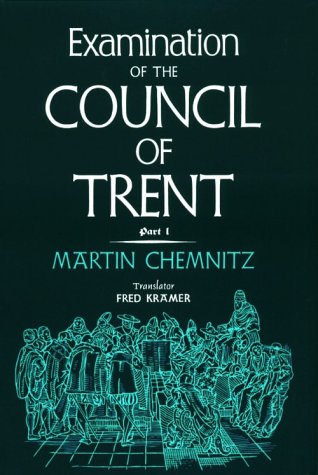
With six days to spare, I have finished my final paper! This one is for Continental Reformation with Dr. Rosin. I chose to do my 10-page research paper on Martin Chemnitz and his Examination of the Council of Trent.
Martin Chemnitz, known as "The Second Martin" was the leader of the second-generation Lutherans in Germany after Luther's death. Roman Catholic leaders at the time are rumored to have uttered the phrase, "If the second Martin had not come, the first Martin would not have stood." And that very well may be true. Chemnitz upheld Reformation teachings at a time when the papacy was trying to stifle it out.
In order to address Reformation ideas, the Roman Catholic Church called the Council of Trent, which took place from 1545-1563. This is seen as the largest event of the Counter-Reformation. Trent was basically a big "NO" to Reformation theology. In response to this Council that anathematized evangelicalism, Martin Chemnitz wrote a four-volume Examination of the Council of Trent.
In this brilliant work, Chemnitz explains why each of the false statements that Rome decreed at the Council are unbiblical and should be overturned. It is a text that is still used in Protestantism today.
One issue that was around during the Reformation was communion under both kinds. At this time, Rome withheld the communion wine from the laity. They said that the laity could partake of the bread, but Jesus' blood was reserved for the priests and bishops. This deliberate withholding of a gift Christ freely gave to his whole church infuriated many reformers and even some Catholics. And the Council of Trent did nothing but uphold this tradition, decreeing that under no circumstances is the cup to be administered to laymen, since it does not belong to them, but only to the clergy.
Luther addressed this in his 1520 treatise, The Babylonian Captivity of the Church, and Chemnitz devoted one hundred pages to it in his Examination of the Council of Trent.
Sadly, this denial of the blood of Christ to Christians just because they are not priests is still practiced in some diocese of the Catholic Church today. In this way, the Council of Trent's legacy still lives. But Martin Chemnitz remains a hero. His Examination, Loci Theologici, and of course the timeless Solid Declaration of the Formula of Concord are true treasures of the Church today. And a paper about this great man was a fine way to finish up my academic semester.

Thursday, December 5, 2013

In the Footsteps of Legends

In the classic movie Chariots of Fire, several of the main characters are track runners at Cambridge University in the late 1910's. Two of the runners (Harold Abrahams and Lord Lindsay) participated in an event toward the beginning of the movie called the College Dash. Also known as the Great Court Run, I found out that this is an actual event here in Cambridge.
It goes like this--every year, someone (or several people) attempt to run the entire way around the courtyard of Trinity College in the time it takes the great clock to strike twelve. You take off running at the first chime, and hope to make it around by the twelfth chime. For the first 700 years of Cambridge's history, no one was able to do it, though hundreds tried. It wasn't until the early twentieth century, according to Chariots of Fire, that a student (Harold Abrahams) finally did it.
That scene is depicted dramatically in the film, and it's a thrill to watch... Even more of a thrill to run.
That's right, I, Jonathan M. Kettler, attempted the College Dash today. My King's College residence pass (which cost me ten quid!) gets me into the all 31 colleges in the University when they are open. So today, I did what I've been wanting to do since I got here: attempt the Great Court Run like Abrahams and Lindsay did.
Walking into town in shorts on a windy December morning is not what you would call a pleasant experience. But once I got into the Great Courtyard of Trinity College, it was all worth it.
I walked around the square, tracing the steps that the actual men ran, snapped a few photos of the beautiful courtyard, and when my watch told me that noon was nearing, I took my mark by the enormous clock.
Since there were dozens of people walking around in the courtyard area, as well as several guards pacing along the paths, I chose not to sprint at my fastest and draw attention to myself, since I'm not entirely sure that they would have looked fondly on an American making a spectacle of himself like that in their college.
So when the first bell tolled, I took off in a 5K-paced jog. The clock's twelfth chime struck when I was about halfway around, but I continued running 'til I got right back to where I started, under the clock tower.
What a thrill! I ran in the footsteps of legends. Now, the next time I watch Chariots of Fire, I can say, "I've done that!" And you can be sure that I will.

Tuesday, December 3, 2013

Immovable Shadows

I try not to talk about the weather very much. Seeing as it’s pretty much the only safe thing to talk about anymore, it gets spoken of a lot. So I try not to make it too common of a topic on my tongue. But, as Ecclesiastes taught me, there’s a time for everything. So brace yourself… I’m about to talk about the weather.
Surprisingly, Cambridge has a semi-arid climate. However, it rains here several times a week. To this Mississippi boy who is used to a couple of hard downpours a month and sunny skies in between, a light rainy mist every other day is unusual to say the least. While it rarely pours down rain in Cambridge, it’s cloudy for six days of the week on average. Sometimes it seems as if the sky is just a blanket of clouds that never moves, casting a week-long shadow on Cambridgeshire until the next beam of sunshine dares to seep through the barricades.
There is an American military base a little ways north of town, and the U.S. military actually will not deploy you there if you have a history of depression. I think the seemingly immovable shadows that make their home across the U.K. are a big reason why British people can be so gloomy and pessimistic. When I walk down the street to class, the grocery store, or a pub, over half the people I pass have their heads down, staring at their shoes. But when the sun decides to shine on this island, it’s a different story. People are more cheerful, smiles are less endangered, and heads for the most part are up.
The dreariness of the weather here in the United Kingdom, if nothing else, has made me appreciate the sunshine more when it appears. Also, with the frequent mist showers, I see rainbows a bit more frequently here than I do back home.

Monday, December 2, 2013

Tutor England

Now that I’ve talked about the facilities at Westfield House, I thought I’d talk about the faculty. Here, professors are called tutors. There are six tutors in all, but I only have three. But first—Principal Lumley! This is Principal Dr. Cyndy Lumley’s first year at Westfield House, and she brings a bright smile to the house every day.
Samuli (who is from Finland) is a student at Cambridge University, but he lives in Luther Hall. He teaches Greek and is doing his doctoral thesis on Romans 6-8.
George Samiec (from Sydney, Australia) is an adjunct tutor here at Westfield House. He is the pastor of 2 congregations in the Evangelical Lutheran Church of England on top of his duties as the Pastoral Practice teacher and Field Experience overseer. George has a great sense of humor and a fun accent.
Dr. Joel Humann is the preceptor at Westfield House. He also teaches Hebrew, Old Testament, Science & Religion, and Pentateuch. Dr. Humann was recently on Issues, Etc. talking about Liturgical Psalms. He is an Old Testament exegete and a wicked bass player. He and Dr. Lumley are both from Canada.
Dr. Boris Gunjevic (from Croatia) is my Christianity in Late Antiquity teacher. He also teaches World Religions, Philosophy of Religion, and Liturgics. He had very helpful insight and direction to give me when I wrote my paper for him. He is also an expert on St. Augustine.
Dr. Jonathan Mumme (an American!) is the pastor of Resurrection Lutheran Church, one of the American recruiters for Westfield House, and the teacher of Lutheran Dogmatics, Christian Ethics, Lutheran Confessions, and English Reformation. Dr. Mumme (pictured on the left) went to Concordia Seminary in St. Louis and got his doctorate in systematic theology at the University of Tubingen in Germany. He has become a mentor to me, and has a great deal of insight about class topics and broader subjects concerning life as a whole. He’s a joy to listen to and is a faithful chaplain.
Finally, Dr. Robert Rosin is my tutor for Readings in Luther and Continental Reformation. Pictured above, Dr. Rosin is a lot of fun, and is one of the most knowledgeable men I have ever had the pleasure of meeting. He is a professor at Concordia Seminary in St. Louis as well as here, so he flies back and forth every couple of weeks! I don’t know how he does it, but we’re glad he does. I’m sure his students in St. Louis are, too.
So there you have it! Six fine tutors and a delightful principal. All four areas of theology are covered: Exegetical theology (Humann & Samuli), Systematic theology (Mumme), Practical theology (Samiec), and Historical theology (Rosin & Gunjevic). I couldn't be more pleased with the stock of brilliant minds in this place. I certainly have a lot to learn from all of them. Who knows—maybe one day I’ll be a scholar like them.

Sunday, December 1, 2013

Appetite for Construction

I thought I’d write a bit about the facilities here at Westfield House. Basically, there are three buildings. The main one is Westfield House (bottom right). This is where the library is, where our classes take place, where the offices are, and where the housekeeper and maintenance man live. Originally, it was where the students lived too, but now there are too many of us. This building was constructed in 1962, and the floor tiles that are still in place were laid by none other than Norman Nagel. He is a legendary professor at Concordia Seminary, and the founder of Westfield House. We have one big classroom and four libraries, making this a heavily-trafficked building.
The second building is the Chapel of St. Titus, which doubles as Resurrection Lutheran Church. This building is over 40 years old, and is made mainly of cinderblocks and wood, making it a bit drafty. I overheard that installing a better heating unit or more insulation will be one of the next construction projects.
The most recent construction completion here at WH is Luther Hall (top left). Only about 2 years old, this is now the residence hall. This is where I and the other students live. Jean and I live in Room 9 on the second floor, which has two big windows, giving us a pleasant view of the other two buildings.
While the facilities here, compared with the other higher education institution in this town, are not fancy or state-of-the-art, they do their job and serve us well. I find Luther Hall comfortable, the Chapel is reverently built, and Westfield House is conducive to learning. No complaints here.